The global corporate landscape is evolving faster than ever before. In 2026, businesses are no longer hiring employees based solely on degrees or years of experience. Instead, companies are focusing on professionals who possess a combination of technical expertise, digital adaptability, strategic thinking, and strong human skills.
The rise of Artificial Intelligence, automation, remote work, cloud computing, and digital transformation has fundamentally changed workplace expectations across industries. Organizations now require employees who can adapt quickly, solve complex problems, collaborate effectively, and work alongside advanced technologies.
As competition for top talent intensifies, understanding the most in-demand corporate skills in 2026 has become essential for job seekers, professionals, students, and even business leaders looking to stay competitive in the modern workforce.
In this article, we explore the top skills companies are actively hiring for in 2026 and why these abilities are shaping the future of corporate success.
Why Corporate Skills Are Changing in 2026
Several major trends are driving the shift in hiring priorities worldwide:
- Artificial Intelligence integration
- Automation of repetitive tasks
- Remote and hybrid work models
- Data-driven decision-making
- Cybersecurity concerns
- Rapid digital transformation
Companies are increasingly automating routine operations, meaning employees are now expected to contribute more strategic, creative, and analytical value.
As a result, businesses are prioritizing professionals who can combine technical capabilities with critical human skills.
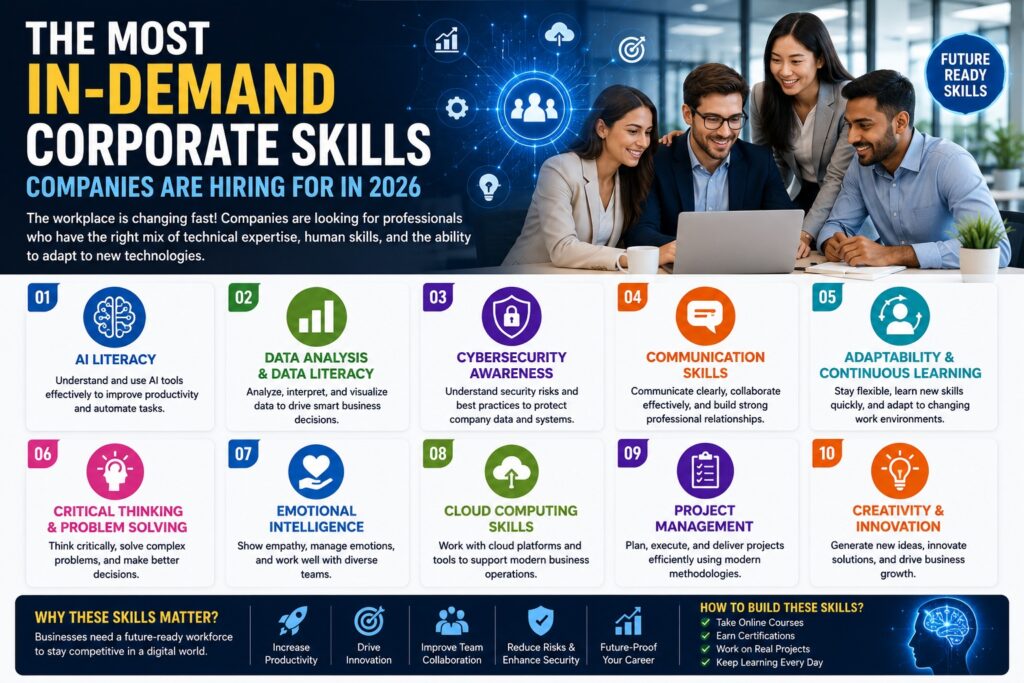
1. AI Literacy
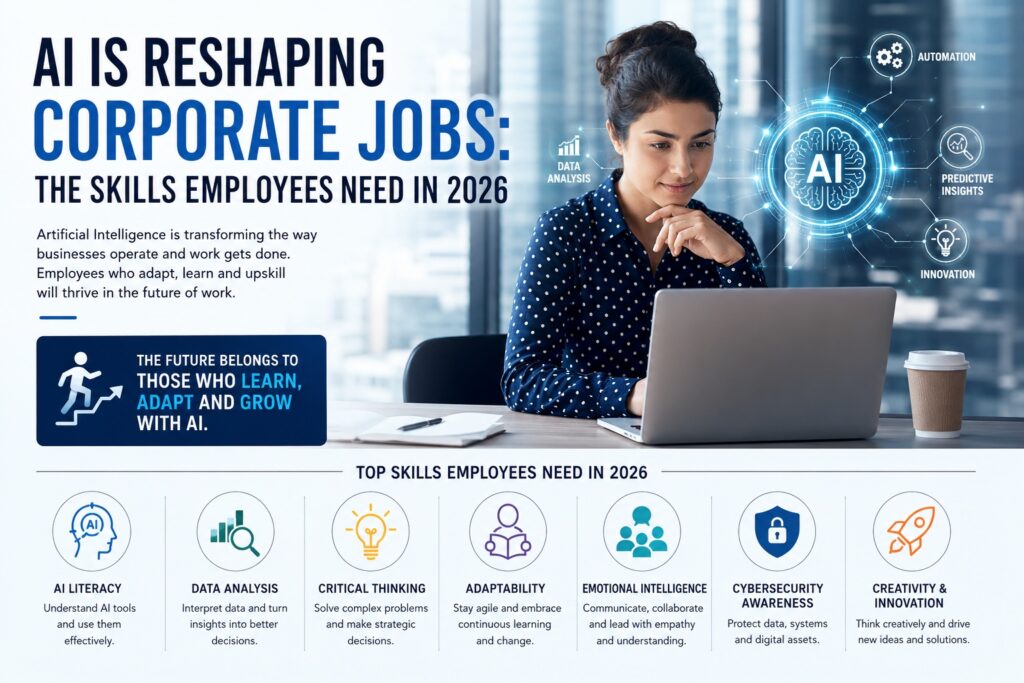
Artificial Intelligence literacy has become one of the most valuable workplace skills in 2026. Employers are actively seeking professionals who understand how AI tools work and how to use them responsibly.
AI literacy does not necessarily mean employees must become programmers or data scientists. Instead, organizations want workers who can:
- Use AI-powered productivity tools
- Interpret AI-generated insights
- Automate workflows
- Understand AI limitations and risks
From marketing and HR to finance and operations, AI knowledge is becoming essential across departments.
Employees who can work effectively alongside AI systems are gaining a major competitive advantage in the job market.
2. Data Analysis and Data Literacy
Modern businesses rely heavily on data-driven decision-making. Organizations are collecting massive amounts of information and need professionals who can analyze, interpret, and apply data effectively.
In-demand data skills include:
- Data visualization
- Business analytics
- Reporting and dashboards
- Predictive analysis
- Spreadsheet and database management
Even non-technical roles now require basic data literacy. Companies want employees who can understand performance metrics, customer behavior, and market trends to support smarter business decisions.
Professionals with strong analytical thinking skills are becoming critical assets across industries.
3. Cybersecurity Awareness
Cybersecurity has become a top corporate priority as businesses continue expanding their digital operations and remote work infrastructure.
Companies are increasingly hiring professionals who understand:
- Data privacy practices
- Secure communication tools
- Cybersecurity risks
- Phishing prevention
- Cloud security basics
Cybersecurity awareness is no longer limited to IT departments. Every employee is now considered part of an organization’s security defense system.
Professionals with cybersecurity knowledge are highly valuable in today’s threat-heavy digital environment.
4. Communication Skills
Despite technological advancements, communication remains one of the most important workplace skills in 2026.
Strong communication skills help employees:
- Collaborate effectively
- Present ideas clearly
- Manage remote teams
- Build client relationships
- Resolve conflicts
Remote and hybrid work models have increased the need for excellent written and verbal communication abilities.
Professionals who can communicate clearly across digital platforms are often more effective leaders and team members.
5. Adaptability and Continuous Learning
Technology and business environments are changing rapidly, making adaptability one of the most important qualities employers seek.
Companies now prioritize candidates who:
- Learn quickly
- Adapt to change
- Embrace new technologies
- Stay updated on industry trends
The ability to continuously learn new tools and processes is becoming more valuable than static knowledge.
Employees who resist change may struggle to remain relevant in the evolving corporate world.
6. Critical Thinking and Problem Solving
AI can automate repetitive tasks, but human problem-solving skills remain irreplaceable.
Organizations are actively hiring employees who can:
- Analyze complex situations
- Make strategic decisions
- Solve business challenges
- Think creatively under pressure
Critical thinking allows businesses to innovate, improve operations, and navigate uncertainty effectively.
Professionals who combine analytical thinking with business understanding are highly sought after in leadership and management roles.
7. Emotional Intelligence
As workplaces become more digital, emotional intelligence is becoming even more important.
Companies value employees who demonstrate:
- Empathy
- Self-awareness
- Leadership
- Collaboration
- Conflict management
Strong emotional intelligence improves workplace culture, employee engagement, and customer relationships.
Managers with emotional intelligence skills are especially important in remote and hybrid work environments.
8. Cloud Computing Skills
Cloud technology powers modern businesses, making cloud-related expertise highly valuable in 2026.
Popular cloud platforms include:
- Amazon Web Services (AWS)
- Microsoft Azure
- Google Cloud
Companies are hiring professionals with cloud skills for:
- Infrastructure management
- Remote collaboration systems
- Data storage solutions
- Application deployment
Cloud computing knowledge is increasingly important for IT professionals, developers, cybersecurity specialists, and system administrators.
9. Project Management
Businesses are prioritizing professionals who can manage projects efficiently in fast-paced environments.
Project management skills include:
- Team coordination
- Deadline management
- Budget planning
- Risk assessment
- Agile methodologies
Organizations value employees who can successfully lead projects while balancing productivity, communication, and strategic goals.
Certifications such as PMP, Scrum Master, and Agile training are becoming increasingly valuable.
10. Creativity and Innovation
While AI tools can automate processes and generate content, human creativity remains essential for innovation and strategic growth.
Companies seek creative employees who can:
- Develop new ideas
- Improve customer experiences
- Build innovative products
- Solve business problems uniquely
Creativity is particularly valuable in industries such as marketing, design, product development, and technology.
Professionals who combine creativity with technical skills are among the most competitive candidates in 2026.
Industries Hiring for These Skills
The demand for these corporate skills spans multiple industries, including:
Technology
AI, cloud computing, cybersecurity, and software development roles continue expanding rapidly.
Finance
Financial firms require professionals skilled in analytics, AI tools, and cybersecurity.
Healthcare
Healthcare organizations are increasingly adopting digital systems and AI-powered technologies.
Marketing
Digital marketing now relies heavily on analytics, automation, AI tools, and customer engagement strategies.
Human Resources
HR departments are using AI-driven recruitment, workforce analytics, and employee management platforms.
How Professionals Can Develop In-Demand Skills
Employees looking to remain competitive in 2026 should focus on continuous self-improvement.
Effective ways to build valuable skills include:
- Online certifications
- Industry workshops
- Professional networking
- Practical projects
- AI and cloud training
- Leadership development programs
Continuous learning has become one of the most important career strategies in today’s digital economy.
The Future of Corporate Hiring
The future workforce will increasingly prioritize versatility over specialization alone. Companies are no longer looking for employees who only perform technical tasks — they want adaptable professionals who can collaborate with AI, solve problems creatively, and drive innovation.
The most successful professionals in 2026 will be those who combine:
- Technical expertise
- Human-centered skills
- Digital adaptability
- Strategic thinking
As businesses continue evolving, the demand for these skills will only continue growing.
Conclusion
The corporate world in 2026 is being shaped by Artificial Intelligence, digital transformation, and rapidly changing workplace dynamics. To remain competitive, professionals must continuously develop skills that align with modern business needs.
AI literacy, data analysis, cybersecurity awareness, communication, adaptability, emotional intelligence, and creativity are now among the most in-demand corporate skills worldwide.
Employees who invest in these abilities will not only improve their career opportunities but also position themselves for long-term success in the future of work.
In today’s competitive job market, learning is no longer optional — it is the foundation of career growth and professional relevance.