Blog

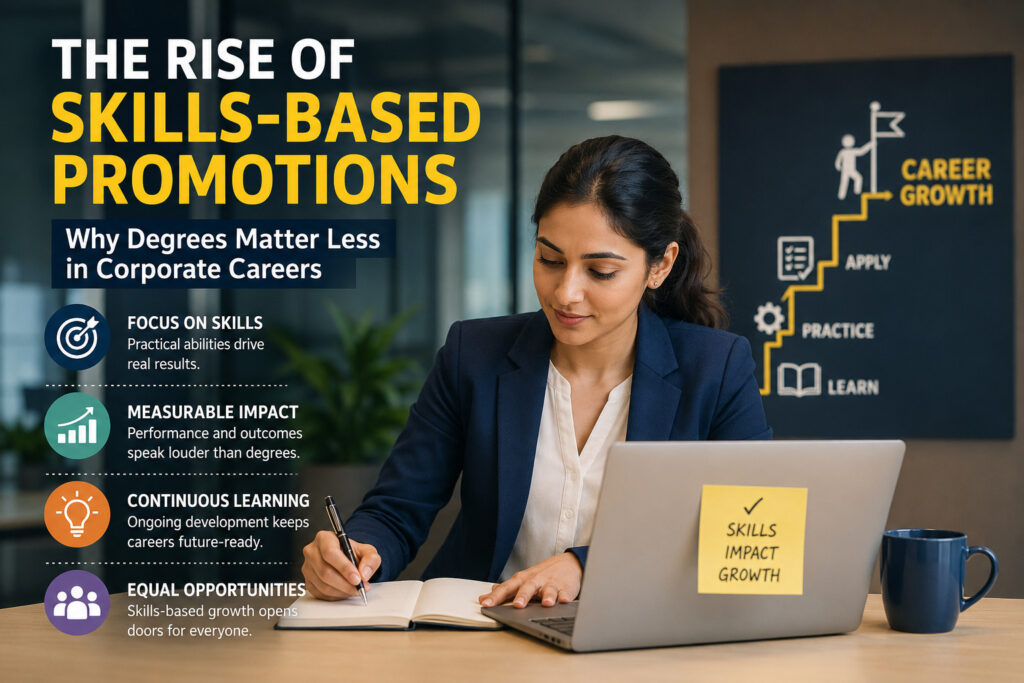
The Rise of Skills-Based Promotions: Why Degrees Matter Less in Corporate Careers

For decades, a college degree was considered the golden ticket to career advancement. Employees with prestigious academic credentials often enjoyed faster promotions, higher salaries, and greater leadership opportunities. However, the corporate world is undergoing a significant transformation in 2026. Organizations are increasingly prioritizing practical skills, proven performance, and measurable business impact over traditional educational qualifications.

This shift toward skills-based promotions is redefining how employees climb the corporate ladder. As industries evolve rapidly due to technological innovation, digital transformation, and changing workforce expectations, companies are discovering that the ability to solve problems and deliver results often matters more than where someone studied.

In today’s workplace, skills have become the new currency of career growth.

What Are Skills-Based Promotions?

Skills-based promotions refer to career advancement decisions that are primarily based on an employee’s demonstrated abilities, achievements, competencies, and contributions rather than academic degrees or years of experience alone.

Instead of asking, “What degree does this employee have?” organizations are increasingly asking:

  • What skills has this employee developed?
  • What measurable results have they delivered?
  • Can they effectively lead teams and projects?
  • How adaptable are they to changing business needs?
  • What value do they bring to the organization?

This approach allows companies to identify high-performing employees who may not possess traditional credentials but consistently demonstrate exceptional capabilities.

Why Companies Are Moving Away from Degree-Centric Promotions

1. Skills Become Obsolete Faster Than Degrees

A degree earned five or ten years ago may not accurately reflect an employee’s current capabilities. In contrast, modern businesses require continuously updated skills to remain competitive.

Fields such as technology, marketing, cybersecurity, data analytics, and project management evolve rapidly. Employers now value professionals who actively learn and adapt rather than relying solely on qualifications obtained years earlier.

As a result, ongoing skill development has become more important than historical academic achievements.

2. Performance Is Easier to Measure

Modern organizations have access to sophisticated performance metrics and workforce analytics.

Managers can evaluate employees based on:

  • Project outcomes
  • Revenue contributions
  • Customer satisfaction scores
  • Leadership effectiveness
  • Team collaboration
  • Innovation initiatives

These measurable indicators provide a clearer picture of an employee’s readiness for promotion than a degree certificate ever could.

3. Talent Shortages Are Forcing New Hiring and Promotion Strategies

Many industries face persistent talent shortages. Organizations can no longer afford to overlook capable employees simply because they lack specific academic credentials.

By focusing on skills, companies can expand their talent pools and promote individuals who have proven their abilities through real-world experience.

This strategy helps businesses fill leadership positions more efficiently while improving employee retention.

4. Internal Mobility Is Becoming a Business Priority

Companies increasingly prefer promoting internal talent rather than hiring externally.

Internal candidates already understand organizational culture, processes, and business objectives. When employees demonstrate the skills needed for higher-level roles, organizations often find it more cost-effective and less risky to promote from within.

Skills-based promotion frameworks support this trend by creating transparent pathways for career growth.

The Skills Most Valued in Corporate Careers Today

While technical expertise remains important, employers are placing greater emphasis on a combination of technical and human skills.

Leadership and Decision-Making

Organizations seek employees who can guide teams, manage challenges, and make informed business decisions.

Communication Skills

Clear communication remains one of the most valuable workplace competencies. Employees who can effectively communicate with stakeholders, clients, and colleagues often advance more quickly.

Problem-Solving Abilities

Companies reward professionals who can identify issues, develop solutions, and drive positive outcomes.

Digital Literacy

Regardless of industry, employees are expected to work effectively with digital tools, data platforms, and emerging technologies.

Adaptability

In an era of constant change, adaptability has become a critical factor in promotion decisions.

Project Management

Professionals who successfully manage projects, timelines, and resources often demonstrate leadership potential that organizations value highly.

How Employees Can Benefit from Skills-Based Promotions

The rise of skills-based advancement creates opportunities for a broader range of professionals.

Greater Career Accessibility

Employees without elite degrees can compete on a more level playing field. Promotions become achievable through demonstrated performance rather than educational pedigree.

Faster Career Growth

Individuals who actively develop in-demand skills can accelerate their advancement regardless of their academic background.

Increased Motivation

Employees often feel more engaged when promotions are tied directly to their contributions and achievements.

More Learning Opportunities

Organizations are investing heavily in employee development programs, certifications, mentorship initiatives, and skills assessments.

This creates a culture of continuous learning that benefits both employees and employers.

The Growing Role of Certifications and Micro-Credentials

As degrees become less central to promotion decisions, alternative forms of professional validation are gaining importance.

Examples include:

  • Industry certifications
  • Technical training programs
  • Professional licenses
  • Digital badges
  • Online learning certificates
  • Leadership development programs

These credentials often provide more current and job-relevant knowledge than traditional educational pathways.

Employers increasingly view them as evidence of an employee’s commitment to continuous improvement and lifelong learning.

Challenges of Skills-Based Promotion Models

Although the benefits are substantial, skills-based promotion systems are not without challenges.

Defining Skills Objectively

Organizations must establish clear criteria for evaluating employee competencies. Without standardized frameworks, promotion decisions may become inconsistent.

Balancing Experience and Skills

While skills matter, experience still plays an important role in leadership readiness. Companies must carefully balance both factors.

Preventing Bias

Managers need training to ensure that promotion decisions remain fair, transparent, and evidence-based.

Continuous Evaluation

Skills evolve over time. Organizations must regularly update competency frameworks to reflect changing business needs.

How Employees Can Prepare for the Future

Professionals seeking career advancement should focus on building a strong portfolio of skills and achievements.

Key strategies include:

  • Pursuing relevant certifications
  • Volunteering for cross-functional projects
  • Developing leadership capabilities
  • Improving communication skills
  • Learning emerging technologies
  • Tracking measurable accomplishments
  • Seeking mentorship opportunities

Employees who consistently invest in their professional growth are more likely to succeed in skills-based promotion environments.

Conclusion

The corporate career landscape is changing rapidly. While degrees continue to hold value, they are no longer the primary factor determining promotion opportunities in many organizations. Companies increasingly recognize that real-world skills, business impact, adaptability, and continuous learning are stronger indicators of future success.

As skills-based promotions become the norm, employees have greater opportunities to advance based on merit rather than credentials alone. For professionals willing to learn, adapt, and demonstrate value, the future offers unprecedented career growth opportunities.

In 2026 and beyond, what you can do is becoming far more important than where you studied. The organizations that embrace this reality will build stronger workforces, and the employees who continuously develop their skills will be best positioned to thrive.

Leave a Reply

Your email address will not be published. Required fields are marked *