Blog

Internal Talent Marketplaces: The Corporate Hiring Revolution Nobody Is Talking About

For years, companies have focused heavily on attracting external talent to fill critical roles. Recruitment teams invested millions in job advertisements, staffing agencies, employer branding, and hiring campaigns. Yet many organizations overlooked a valuable resource already within their walls—their existing employees.

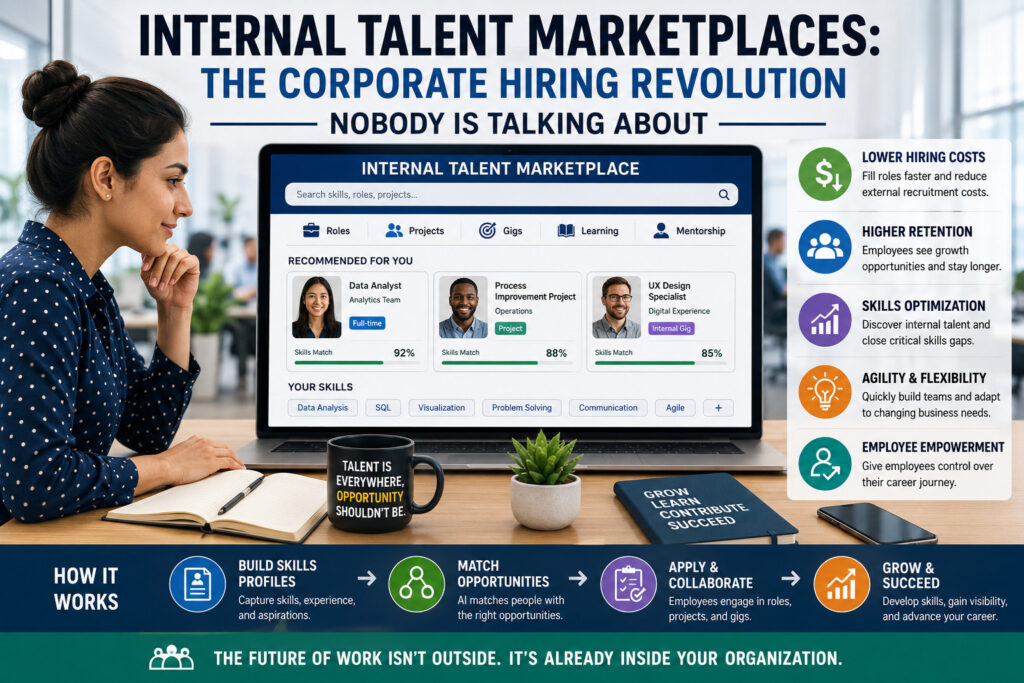
In 2026, a growing number of companies are embracing a powerful workforce strategy known as the Internal Talent Marketplace (ITM). These platforms help organizations identify, develop, and deploy internal talent more effectively by matching employees with new projects, temporary assignments, mentorship opportunities, skill-building programs, and open positions.

While artificial intelligence, remote work, and workforce automation often dominate discussions about the future of work, internal talent marketplaces are quietly transforming how companies hire, promote, and retain employees. For many organizations, they represent the next evolution of workforce management.

What Is an Internal Talent Marketplace?

An internal talent marketplace is a technology-driven platform that connects employees with opportunities within their organization based on their skills, interests, experience, and career goals.

Think of it as an internal job board combined with a talent development ecosystem.

Instead of relying solely on managers to identify candidates for projects or promotions, internal talent marketplaces use data and skills mapping to recommend opportunities that align with an employee’s capabilities.

These opportunities may include:

  • Full-time job openings
  • Cross-functional projects
  • Leadership programs
  • Mentorship opportunities
  • Temporary assignments
  • Skill development initiatives
  • Internal gig work
  • Career advancement pathways

The goal is simple: maximize the potential of existing employees before seeking external hires.

Why Companies Are Investing in Internal Talent Marketplaces

Organizations today face increasing pressure to address talent shortages, improve retention, and control recruitment costs.

Internal talent marketplaces provide solutions to all three challenges.

1. Reducing Recruitment Costs

Hiring externally is expensive. Costs associated with job advertising, recruiter fees, onboarding, and training can quickly add up.

When organizations fill positions internally, they significantly reduce hiring expenses while accelerating the transition process.

Existing employees already understand company culture, systems, and business objectives, making them productive more quickly than external hires.

2. Improving Employee Retention

One of the most common reasons employees leave organizations is a lack of growth opportunities.

When workers feel their career progression has stalled, they often seek advancement elsewhere.

Internal talent marketplaces address this issue by providing greater visibility into available opportunities. Employees gain access to new projects, departments, and career paths without needing to leave the organization.

This increased mobility often leads to higher engagement and stronger retention rates.

3. Addressing Skills Gaps

The pace of technological change is creating skills shortages across industries.

Instead of constantly searching for external talent, companies can identify employees with transferable skills and help them transition into emerging roles.

This approach allows organizations to build future-ready workforces while reducing dependency on external hiring.

How Internal Talent Marketplaces Work

Modern talent marketplaces are powered by artificial intelligence, workforce analytics, and skills intelligence systems.

These platforms typically collect data from:

  • Employee profiles
  • Performance reviews
  • Certifications
  • Learning records
  • Project experience
  • Career aspirations
  • Manager assessments

Using this information, the system creates a comprehensive skills inventory for each employee.

When new opportunities arise, the platform automatically recommends suitable candidates based on their capabilities and interests.

Employees can also browse available roles and projects independently, giving them greater control over their career development.

The Benefits for Employees

Internal talent marketplaces are not just beneficial for employers—they create significant advantages for employees as well.

Greater Career Visibility

Many employees are unaware of opportunities available within their organizations.

Internal talent platforms provide transparency and help employees discover positions they may never have considered.

Faster Career Growth

Employees can gain valuable experience through temporary assignments, project-based work, and cross-functional collaboration.

These experiences often accelerate professional development and prepare individuals for future leadership roles.

Increased Skill Development

Workers gain access to learning opportunities directly linked to business needs.

This allows employees to develop highly relevant skills while improving their long-term career prospects.

Enhanced Job Satisfaction

Employees who see clear growth opportunities are generally more engaged and motivated.

When organizations invest in internal mobility, workers feel valued and are more likely to remain loyal to the company.

Why Traditional Hiring Models Are Losing Effectiveness

The corporate hiring landscape has changed dramatically over the past decade.

Traditional recruitment models face several challenges:

Talent Shortages

Many industries struggle to find qualified candidates with specialized skills.

Longer Hiring Cycles

External hiring processes often take weeks or months to complete.

Higher Turnover Risks

External hires sometimes face challenges adapting to company culture, increasing the risk of early departures.

Rising Recruitment Costs

Competition for top talent continues to drive hiring expenses upward.

Internal talent marketplaces help organizations overcome these obstacles by unlocking hidden talent already present within the workforce.

The Role of AI in Internal Talent Marketplaces

Artificial intelligence has become a key driver of modern talent marketplace platforms.

AI helps organizations:

  • Identify transferable skills
  • Predict employee potential
  • Recommend career pathways
  • Match employees with projects
  • Detect workforce gaps
  • Personalize learning opportunities

For example, an employee working in customer service may possess communication, problem-solving, and analytical skills that make them a strong candidate for project management roles.

AI systems can identify these connections and suggest development opportunities that might otherwise go unnoticed.

Challenges Organizations Must Address

Although internal talent marketplaces offer significant benefits, successful implementation requires careful planning.

Cultural Resistance

Some managers may hesitate to allow high-performing employees to move into other departments.

Organizations must create cultures that support internal mobility rather than talent hoarding.

Data Accuracy

Talent marketplace recommendations depend on accurate skills data.

Employees and managers must regularly update profiles and competency assessments.

Employee Awareness

Workers need education and encouragement to actively participate in marketplace programs.

Without engagement, adoption rates may remain low.

Fairness and Transparency

Companies must ensure opportunities are distributed fairly and free from bias.

Clear policies and governance structures help build employee trust.

The Future of Workforce Mobility

Experts predict that internal talent marketplaces will become standard practice in large organizations over the next several years.

As businesses continue shifting toward skills-based workforce strategies, employees will increasingly be evaluated based on capabilities rather than job titles alone.

Future workplace models may include:

  • AI-powered career coaches
  • Dynamic skills profiles
  • Project-based staffing
  • Internal gig economies
  • Personalized career development plans
  • Continuous learning pathways

Organizations that embrace these approaches will likely enjoy greater workforce agility, stronger retention, and improved employee satisfaction.

Conclusion

Internal talent marketplaces represent one of the most important yet underappreciated workforce trends shaping the future of work. By connecting employees with opportunities that match their skills and aspirations, organizations can unlock hidden talent, reduce hiring costs, and strengthen workforce resilience.

For employees, these platforms create greater visibility, faster career growth, and more opportunities to develop valuable skills. For employers, they provide a powerful solution to talent shortages and workforce transformation challenges.

In a business environment where attracting and retaining talent has never been more difficult, the smartest companies are beginning to look inward. The future of hiring may not be about finding better talent outside the organization—it may be about discovering the talent that already exists within.

Leave a Reply

Your email address will not be published. Required fields are marked *