Artificial intelligence was supposed to make work easier. Businesses invested heavily in AI-powered tools, automation platforms, digital assistants, and productivity software with the promise of reducing workloads and improving efficiency. In many ways, these technologies have delivered on those promises. Employees can now automate repetitive tasks, analyze data faster, generate reports in seconds, and collaborate more effectively than ever before.
Yet an unexpected problem has emerged in the modern workplace: burnout is rising, especially among high-performing employees.
In 2026, many organizations are discovering a paradox. While productivity has increased dramatically thanks to AI, employee well-being has not improved at the same pace. In fact, many top performers report feeling more overwhelmed, mentally exhausted, and pressured than ever before.
The AI productivity era has created new opportunities for growth and innovation, but it has also introduced a workplace culture where expectations continue to rise faster than employees can adapt. As a result, burnout has become one of the most pressing challenges facing businesses today.
What Is Corporate Burnout?
Corporate burnout is a state of physical, emotional, and mental exhaustion caused by prolonged workplace stress.
Common symptoms include:
- Chronic fatigue
- Reduced motivation
- Increased anxiety
- Difficulty concentrating
- Emotional detachment
- Lower job satisfaction
- Declining performance
Burnout affects employees at all levels, but recent workplace trends suggest that high performers may be particularly vulnerable.
These individuals often carry greater responsibilities, maintain ambitious goals, and consistently exceed expectations. When organizations introduce productivity-enhancing technologies, these employees frequently become the first to embrace them—and the first to experience their unintended consequences.
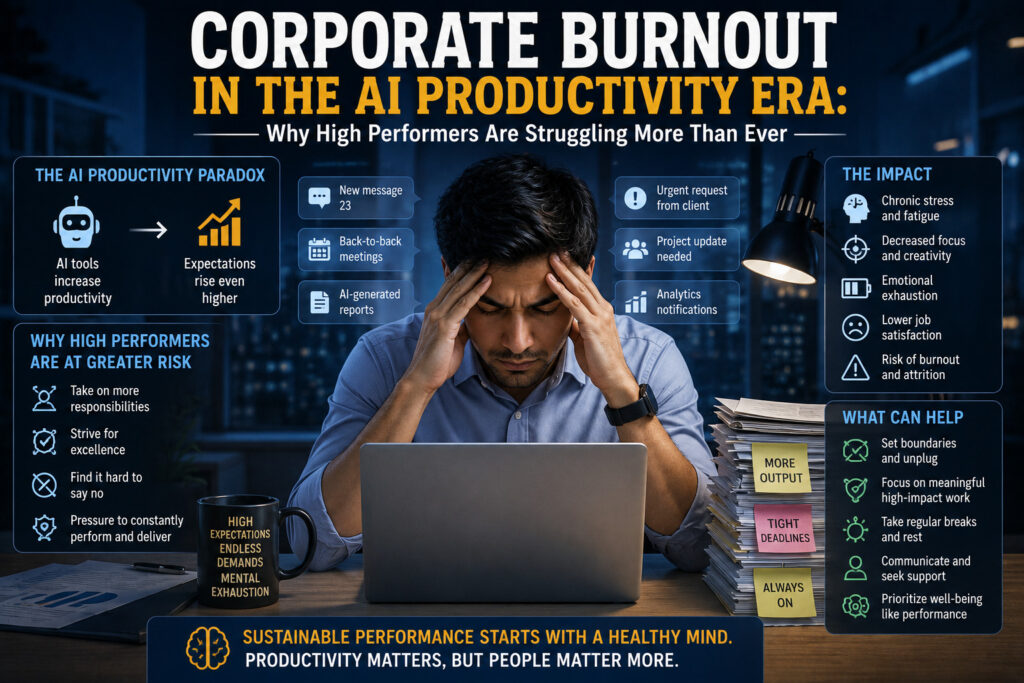
The AI Productivity Paradox
Artificial intelligence has dramatically improved workplace efficiency. Tasks that once required hours can now be completed within minutes.
However, many organizations have responded by increasing expectations rather than reducing workloads.
More Output, Higher Expectations
Historically, productivity gains often allowed employees to complete work more efficiently. Today, those gains frequently result in additional responsibilities.
For example:
- Faster report generation leads to requests for more reports.
- Automated analysis leads to more data-driven decision-making tasks.
- AI-assisted content creation increases publishing expectations.
- Streamlined workflows create pressure to deliver more projects.
Instead of creating breathing room, productivity improvements often raise performance standards.
As a result, employees may find themselves working harder despite having more advanced tools.
Why High Performers Are Most at Risk
High-performing employees are often viewed as organizational assets. They consistently deliver results, solve problems, and take initiative.
Unfortunately, these same qualities can make them more susceptible to burnout.
1. They Become the “Go-To” Employees
Managers frequently assign additional responsibilities to employees who have proven they can handle them.
As workloads increase, high performers may struggle to establish boundaries, leading to chronic overcommitment.
2. They Adopt New Technologies Faster
Top performers are often early adopters of AI and productivity tools.
While this helps them stay competitive, it can also increase expectations from leadership and colleagues who assume they can consistently produce more work.
3. They Set Unrealistically High Standards
Many high achievers place significant pressure on themselves.
The ability to complete tasks faster with AI tools can create an internal expectation to constantly maximize productivity, leaving little room for recovery or balance.
4. Success Creates More Work
Ironically, success often leads to greater responsibilities.
Employees who consistently exceed expectations are frequently rewarded with larger projects, leadership opportunities, and increased workloads.
Without adequate support, these demands can become unsustainable.
The Impact of Always-On Work Culture
The AI era has accelerated the trend toward continuous connectivity.
Employees now have access to:
- Collaboration platforms
- AI assistants
- Mobile productivity tools
- Instant communication systems
- Real-time analytics dashboards
While these technologies improve responsiveness, they also blur the boundaries between work and personal life.
Many professionals feel pressure to remain available beyond traditional working hours.
The result is a workplace environment where employees struggle to disconnect, recover, and recharge.
Digital Overload Is Replacing Manual Overload
In previous decades, burnout was often associated with excessive physical workloads or long hours.
Today’s burnout is increasingly driven by cognitive overload.
Employees must constantly process:
- Emails
- Notifications
- Virtual meetings
- Data dashboards
- AI-generated recommendations
- Project updates
- Collaboration requests
The sheer volume of information can create mental fatigue even when tasks themselves are less physically demanding.
This phenomenon is often referred to as digital overload.
The Hidden Emotional Cost of AI
Artificial intelligence may automate tasks, but it cannot eliminate emotional labor.
Employees still face:
- Performance pressure
- Workplace competition
- Client expectations
- Team dynamics
- Leadership responsibilities
In some cases, AI tools can actually increase stress by creating concerns about:
- Job security
- Changing skill requirements
- Performance monitoring
- Constant adaptation
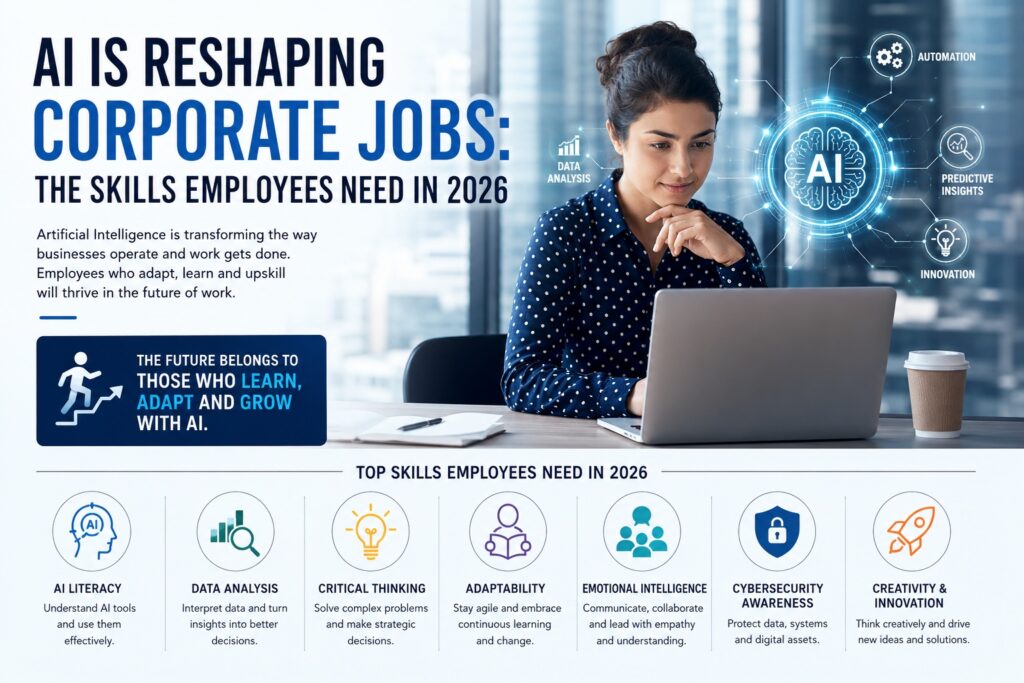
Workers may feel they must continuously learn new technologies simply to remain relevant in the workforce.
This ongoing pressure contributes significantly to emotional exhaustion.
How Organizations Are Responding
Forward-thinking companies are beginning to recognize that productivity alone is not a sustainable measure of success.
Many organizations are implementing strategies to support employee well-being.
Redefining Performance Metrics
Companies are moving beyond output-based evaluations and considering factors such as:
- Collaboration quality
- Innovation
- Employee engagement
- Sustainable performance
- Team development
Encouraging Recovery Time
Some employers actively promote:
- Flexible schedules
- Mental health days
- Wellness programs
- Mandatory vacation usage
- Meeting-free work periods
These initiatives help employees maintain healthier work-life balance.
AI Governance for Employee Well-Being
Organizations are developing policies that ensure AI tools enhance productivity without creating unrealistic expectations.
Responsible AI adoption focuses on supporting employees rather than simply increasing workloads.
Investing in Mental Health Resources
Many companies now provide access to:
- Counseling services
- Stress management programs
- Employee assistance programs
- Wellness coaching
These resources help employees manage workplace pressures more effectively.
What Employees Can Do to Prevent Burnout
While organizations play a critical role, individuals must also take proactive steps to protect their well-being.
Set Clear Boundaries
Establish limits around working hours and digital availability.
Focus on High-Value Work
Use AI tools to eliminate repetitive tasks rather than simply increasing output.
Prioritize Recovery
Regular breaks, exercise, sleep, and personal time remain essential for long-term performance.
Develop Digital Discipline
Limit unnecessary notifications and create focused work periods free from interruptions.
Communicate Workload Concerns
Open communication with managers can help prevent unrealistic expectations from escalating.
The Future of Workplace Productivity
The future of work will likely depend on balancing technological advancement with human sustainability.
Organizations that focus exclusively on productivity metrics may experience higher turnover, lower engagement, and increased burnout rates.
In contrast, companies that prioritize both performance and employee well-being will be better positioned to attract, retain, and develop top talent.
The most successful businesses of the future will not simply ask how much work employees can produce. They will ask how work can be structured to support both organizational success and human flourishing.
Conclusion
The AI productivity era has transformed the modern workplace, enabling unprecedented levels of efficiency and innovation. However, these gains have also introduced new pressures that contribute to rising burnout among employees—especially high performers.
As productivity expectations continue to increase, organizations must recognize that sustainable success depends on more than technology alone. Employee well-being, mental health, and work-life balance are becoming critical components of long-term business performance.
The future of work is not about doing more at any cost. It is about using technology intelligently while ensuring that the people behind the productivity remain healthy, engaged, and capable of thriving in an increasingly demanding workplace.