Blog

The New Corporate Career Ladder: Why Portfolio Work Is Replacing Traditional Job Titles

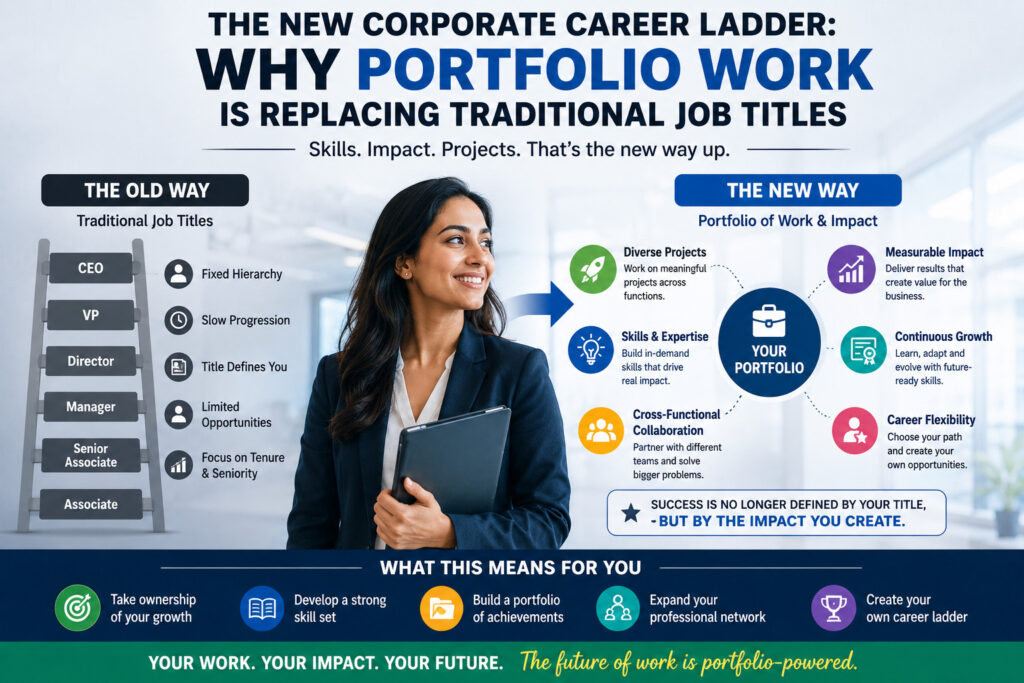
For decades, career progression followed a predictable path. Employees climbed the corporate ladder one rung at a time, moving from junior positions to management roles and eventually into executive leadership. Job titles served as clear indicators of status, expertise, and career achievement.

However, the modern workplace is undergoing a profound transformation. In 2026, companies are increasingly prioritizing skills, business impact, and project contributions over traditional job titles. As organizations become more agile and technology-driven, a new model of career advancement is emerging—one built around portfolio work rather than hierarchical positions.

Today, professionals are being evaluated not only by what their title says but by the collection of projects, achievements, skills, and experiences they bring to the organization. This shift is redefining career growth and creating new opportunities for ambitious employees.

What Is Portfolio Work?

Portfolio work refers to a collection of projects, accomplishments, skills, and experiences that demonstrate an individual’s capabilities and business impact.

Traditionally, portfolios were associated with creative professions such as design, writing, and architecture. Today, however, professionals across industries are building career portfolios that showcase their value.

A portfolio may include:

  • Successful projects
  • Process improvements
  • Leadership initiatives
  • Cross-functional collaborations
  • Revenue-generating contributions
  • Certifications and training
  • Digital products or solutions
  • Innovation initiatives

Rather than focusing solely on job titles, employers increasingly examine what employees have accomplished and the measurable results they have delivered.

Why Traditional Job Titles Are Losing Importance

Several workplace trends are driving the decline of title-based career advancement.

1. Work Is Becoming More Project-Oriented

Organizations are increasingly structured around projects rather than rigid departmental hierarchies.

Employees frequently collaborate across teams, functions, and business units. As a result, their contributions often extend far beyond the responsibilities defined by their official job titles.

An employee’s impact is now measured by outcomes rather than position.

2. Skills Matter More Than Titles

Companies are shifting toward skills-based workforce strategies.

An employee may hold a mid-level title while possessing advanced expertise in emerging technologies, project management, or business strategy.

Organizations recognize that skills often provide a more accurate indicator of future success than job titles alone.

3. Agile Business Models Require Flexibility

Modern businesses must adapt quickly to changing market conditions.

Rigid career structures can slow innovation and limit workforce agility.

By emphasizing portfolio contributions, companies can deploy talent more effectively and encourage employees to take on diverse responsibilities.

4. Technology Has Changed How Work Is Measured

Digital tools allow organizations to track performance, project outcomes, and business impact with greater accuracy than ever before.

This makes it easier for employers to evaluate employees based on results rather than titles or tenure.

The Rise of Portfolio Careers

A portfolio career is built on a diverse range of experiences, projects, and skill sets rather than a linear progression through increasingly senior job titles.

Professionals increasingly develop expertise across multiple domains, including:

  • Technology
  • Marketing
  • Data analytics
  • Product management
  • Operations
  • Leadership
  • Customer experience

This multidimensional approach creates more adaptable and resilient career paths.

Instead of asking, “What is your title?” employers are increasingly asking:

  • What projects have you led?
  • What challenges have you solved?
  • What measurable outcomes have you achieved?
  • What skills can you bring to future initiatives?

These questions reveal a candidate’s true value more effectively than a title on a business card.

How Companies Are Evaluating Employees Today

Organizations are adopting new performance metrics focused on impact rather than hierarchy.

Project Success

Employees who consistently deliver successful projects gain visibility regardless of their formal position.

Business Outcomes

Revenue growth, cost savings, customer satisfaction improvements, and operational efficiencies are becoming key indicators of career advancement potential.

Collaboration Skills

Cross-functional teamwork is increasingly valued in organizations that prioritize innovation and agility.

Learning Agility

Employees who continuously develop new skills and adapt to change are often considered stronger candidates for future opportunities.

Leadership Influence

Leadership is no longer confined to management roles. Professionals who influence teams, drive initiatives, and mentor colleagues often build strong career portfolios even without formal leadership titles.

Benefits of Portfolio-Based Career Growth

The shift toward portfolio work offers advantages for both employees and employers.

For Employees

Greater Career Flexibility

Professionals can pursue diverse opportunities without being constrained by traditional career paths.

Faster Advancement

Employees who demonstrate impact through projects can gain recognition more quickly than those relying solely on tenure.

Increased Employability

A strong portfolio showcases transferable skills that remain valuable across industries and roles.

More Learning Opportunities

Project-based work often exposes employees to new technologies, business functions, and leadership experiences.

For Employers

Better Talent Utilization

Organizations can identify high-potential employees based on demonstrated capabilities rather than job classifications.

Improved Workforce Agility

Portfolio-focused employees are often more adaptable and capable of handling evolving business needs.

Enhanced Innovation

Cross-functional experiences encourage creative problem-solving and knowledge sharing across teams.

Building a Strong Professional Portfolio

Employees seeking long-term career success should actively cultivate a portfolio of achievements.

Document Key Accomplishments

Keep records of successful projects, measurable outcomes, and business contributions.

Develop Diverse Skills

Invest in both technical and soft skills that increase versatility and adaptability.

Seek Cross-Functional Opportunities

Working with different teams expands experience and strengthens professional credibility.

Pursue Certifications

Industry-recognized certifications can validate expertise and enhance portfolio value.

Demonstrate Leadership

Taking initiative, mentoring colleagues, and leading projects can strengthen professional reputation regardless of title.

Challenges of Portfolio-Based Career Models

While portfolio careers offer numerous benefits, they also present challenges.

Measuring Contributions Fairly

Organizations must establish transparent frameworks for evaluating project-based achievements.

Avoiding Overwork

Employees may feel pressure to continuously accumulate projects and accomplishments.

Balancing Specialization and Versatility

Professionals must find the right balance between developing deep expertise and broad capabilities.

Organizational Resistance

Some companies still rely heavily on traditional hierarchical structures, making cultural change a gradual process.

The Future of Corporate Careers

The future workplace is likely to become increasingly skills-driven and project-oriented.

Experts predict that organizations will continue moving toward:

  • Skills-based promotions
  • Internal talent marketplaces
  • Dynamic career pathways
  • Project-based staffing
  • Continuous learning models
  • Portfolio-focused performance evaluations

As technology reshapes industries and workforce expectations evolve, traditional career ladders may gradually give way to more flexible and personalized career journeys.

Employees who embrace this shift will be better positioned to navigate future opportunities and remain competitive in a rapidly changing labor market.

Conclusion

The traditional corporate ladder is no longer the only path to professional success. In today’s workplace, portfolios of skills, achievements, and project outcomes are becoming more important than job titles alone.

Organizations increasingly value employees who can demonstrate measurable impact, adapt to changing business needs, and contribute across multiple functions. As a result, career growth is shifting from a title-based model to a portfolio-based model that rewards results, learning, and versatility.

For professionals looking to thrive in the future of work, the message is clear: focus less on collecting titles and more on building a portfolio of meaningful accomplishments. In the years ahead, what you have achieved may matter far more than what your business card says.

Leave a Reply

Your email address will not be published. Required fields are marked *