Artificial Intelligence is transforming the global workforce at an unprecedented pace. From automated customer support systems and AI-powered analytics to robotic process automation and generative AI tools, businesses across industries are rapidly integrating intelligent technologies into daily operations.
As AI adoption continues accelerating in 2026, one question dominates conversations among employees, students, and professionals worldwide:
Which jobs are safe from AI until 2030?
While AI is undoubtedly replacing certain repetitive and rule-based tasks, it is also creating entirely new opportunities for human workers. The future of employment is not simply about humans versus machines — it is increasingly about collaboration between human intelligence and artificial intelligence.
In this article, we explore how AI is changing the workforce, which types of jobs face the highest automation risk, and which careers are likely to remain secure and valuable through 2030.
How AI Is Changing the Modern Workplace
AI systems are now capable of performing tasks that once required human effort, including:
- Data analysis
- Content generation
- Customer support
- Scheduling
- Basic coding
- Document summarization
- Pattern recognition
Businesses are adopting AI because it can:
- Improve efficiency
- Reduce costs
- Operate continuously
- Minimize repetitive workloads
- Process massive amounts of information quickly
However, despite these capabilities, AI still struggles with areas that require emotional understanding, creativity, ethical reasoning, leadership, and human judgment.
This distinction is critical when determining which jobs are safer from automation.
Which Jobs Are Most Vulnerable to AI?
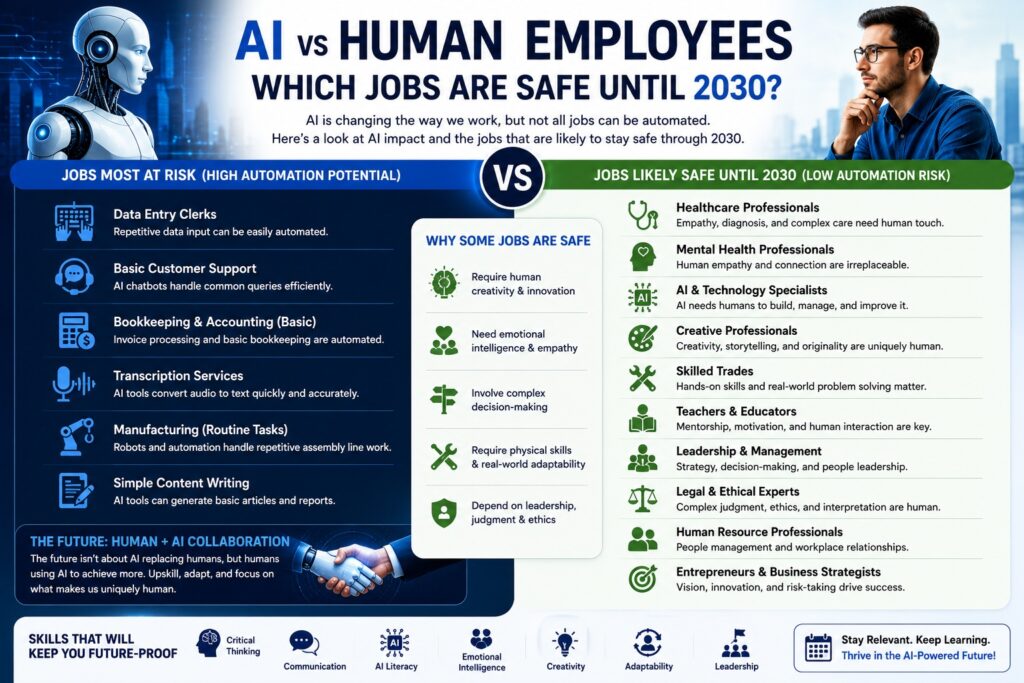
Jobs involving repetitive, predictable, and rule-based tasks face the highest automation risk.
These include:
- Basic data entry
- Repetitive administrative work
- Simple customer service roles
- Routine bookkeeping
- Basic transcription
- Standardized manufacturing tasks
AI tools can perform these functions faster and often more accurately than humans.
For example:
- AI chatbots can handle common customer queries
- Automation software can process invoices
- AI writing tools can generate simple reports
- Algorithms can analyze large datasets instantly
As businesses seek efficiency, many routine tasks are increasingly becoming automated.
What Makes a Job Safe From AI?
Jobs that are likely to remain secure until 2030 generally involve qualities AI cannot fully replicate.
These include:
- Emotional intelligence
- Creativity
- Human interaction
- Strategic thinking
- Leadership
- Ethical decision-making
- Complex problem-solving
- Adaptability
Careers that combine technical expertise with strong human skills are expected to remain highly valuable in the AI era.
Top Jobs Likely Safe From AI Until 2030
1. Healthcare Professionals
Doctors, nurses, therapists, and healthcare specialists are among the safest professionals in the AI-driven future.
While AI can assist with diagnostics and data analysis, human healthcare requires:
- Empathy
- Patient communication
- Emotional support
- Ethical judgment
- Complex decision-making
Healthcare workers provide personalized care that AI systems cannot fully replace.
Safe Healthcare Roles:
- Physicians
- Surgeons
- Psychologists
- Nurses
- Physical therapists
The healthcare industry is expected to continue growing significantly through 2030.
2. Mental Health Professionals
Mental health support relies heavily on emotional intelligence and human connection.
AI chatbots may assist with basic mental wellness support, but people still seek real empathy, trust, and emotional understanding from trained professionals.
Examples:
- Therapists
- Counselors
- Clinical psychologists
- Social workers
Human relationships remain central to mental healthcare.
3. AI and Technology Specialists
Ironically, the rise of AI is also creating more jobs in technology.
Professionals who build, manage, and secure AI systems will remain highly valuable.
In-Demand Roles:
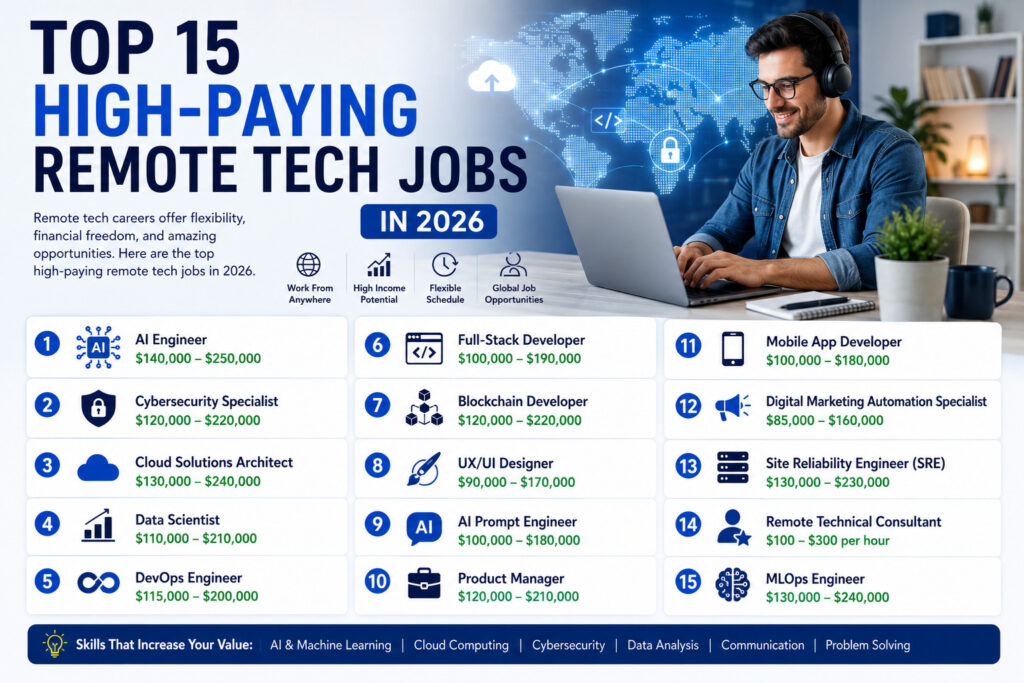
- AI Engineers
- Machine Learning Specialists
- Cybersecurity Experts
- Cloud Architects
- Data Scientists
AI still requires skilled humans to develop, monitor, and improve intelligent systems.
4. Creative Professionals
Although generative AI can produce content, human creativity remains difficult to replicate fully.
Creative professionals bring originality, storytelling, emotional depth, and cultural understanding to their work.
Safer Creative Careers:
- Brand strategists
- Creative directors
- UX designers
- Filmmakers
- Marketing strategists
AI may assist creative processes, but human imagination still drives innovation.
5. Skilled Trades
Many hands-on professions are surprisingly resistant to automation.
Jobs involving physical environments, adaptability, and manual precision remain difficult for AI and robots to replace economically.
Examples:
- Electricians
- Plumbers
- Carpenters
- HVAC technicians
- Mechanics
These careers require real-world problem-solving in constantly changing conditions.
6. Leadership and Management Roles
AI can provide data insights, but leadership requires human judgment, communication, and relationship-building.
Managers must:
- Motivate teams
- Resolve conflicts
- Make strategic decisions
- Understand human behavior
- Build company culture
Strong leadership skills will remain highly valuable through 2030 and beyond.
7. Teachers and Educators
AI can support education through personalized learning systems and tutoring platforms, but teachers provide mentorship, emotional support, and social development that technology cannot replace.
Important Human Elements:
- Student engagement
- Classroom management
- Emotional guidance
- Motivation
Education still depends heavily on human interaction and communication.
8. Legal and Ethical Experts
AI can analyze legal documents quickly, but law often requires interpretation, negotiation, and ethical reasoning.
Professionals who handle complex legal and ethical matters are expected to remain essential.
Safer Legal Roles:
- Trial lawyers
- Legal consultants
- Compliance specialists
- Ethics advisors
As AI regulations grow, legal expertise may become even more important.
9. Human Resource Professionals
Recruitment and workforce management increasingly involve AI tools, but HR still relies heavily on interpersonal skills.
HR professionals handle:
- Workplace conflicts
- Employee engagement
- Leadership development
- Organizational culture
- Sensitive conversations
Human-centered management remains difficult to automate.
10. Entrepreneurs and Business Strategists
Entrepreneurship requires innovation, risk-taking, market understanding, and strategic thinking.
AI can provide insights and automate processes, but humans still drive vision, creativity, and business leadership.
Professionals who can adapt quickly and identify emerging opportunities are likely to thrive in the AI economy.
The Future Is Human + AI Collaboration
The future workplace is not about humans competing directly against AI. Instead, successful professionals will increasingly use AI as a productivity tool.
Employees who learn how to:
- Work alongside AI
- Automate repetitive tasks
- Use AI responsibly
- Focus on human strengths
will remain highly competitive.
The most valuable workers in 2030 will likely combine:
- Technical understanding
- Creativity
- Emotional intelligence
- Strategic thinking
- Adaptability
AI will enhance many jobs rather than fully replace them.
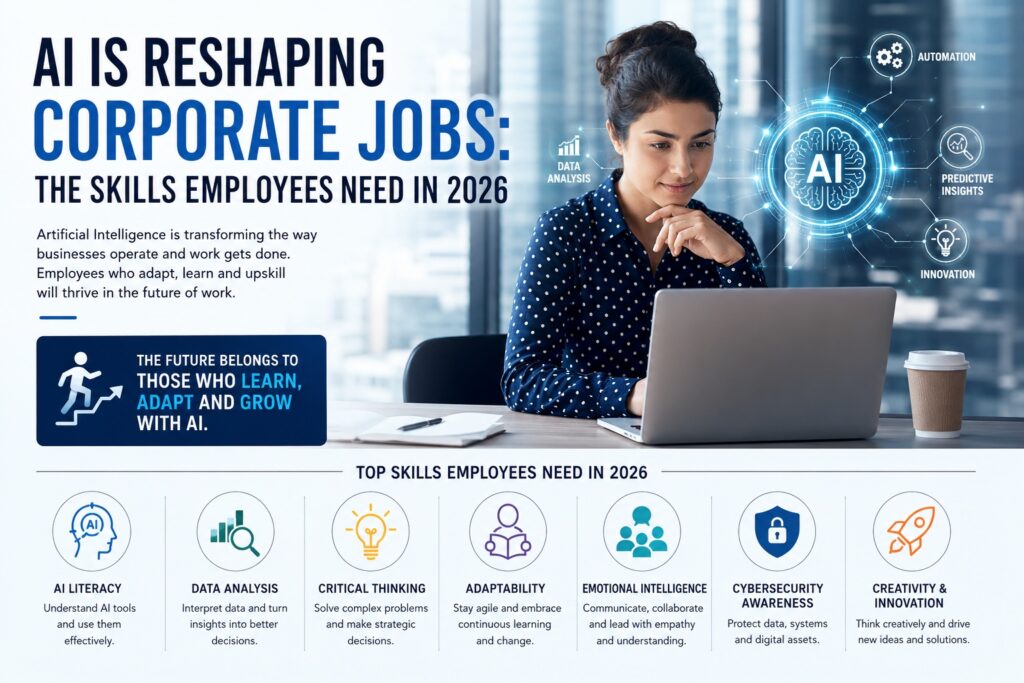
Skills That Will Protect Careers Until 2030
To remain relevant in the evolving workforce, professionals should focus on developing future-proof skills such as:
- Critical thinking
- Communication
- AI literacy
- Emotional intelligence
- Leadership
- Problem-solving
- Creativity
- Adaptability
Continuous learning will become one of the most important career strategies in the coming years.
How Employees Can Prepare for the AI Era
Professionals should not fear AI — they should learn how to use it effectively.
Practical career strategies include:
- Learning AI tools related to your industry
- Building strong human-centered skills
- Staying updated on technology trends
- Investing in continuous education
- Developing leadership abilities
Adaptability is becoming more valuable than static expertise.
Conclusion
Artificial Intelligence is undoubtedly transforming the workforce, automating repetitive tasks and reshaping industries worldwide. However, not all jobs are equally vulnerable to automation.
Careers that rely heavily on emotional intelligence, creativity, leadership, complex problem-solving, and human interaction are expected to remain relatively safe until 2030.
Rather than replacing humans entirely, AI is more likely to change how people work. The future belongs to professionals who can combine human strengths with technological capabilities.
In the coming years, the safest careers will not necessarily be the most technical — they will be the most adaptable, creative, and human-centered.